
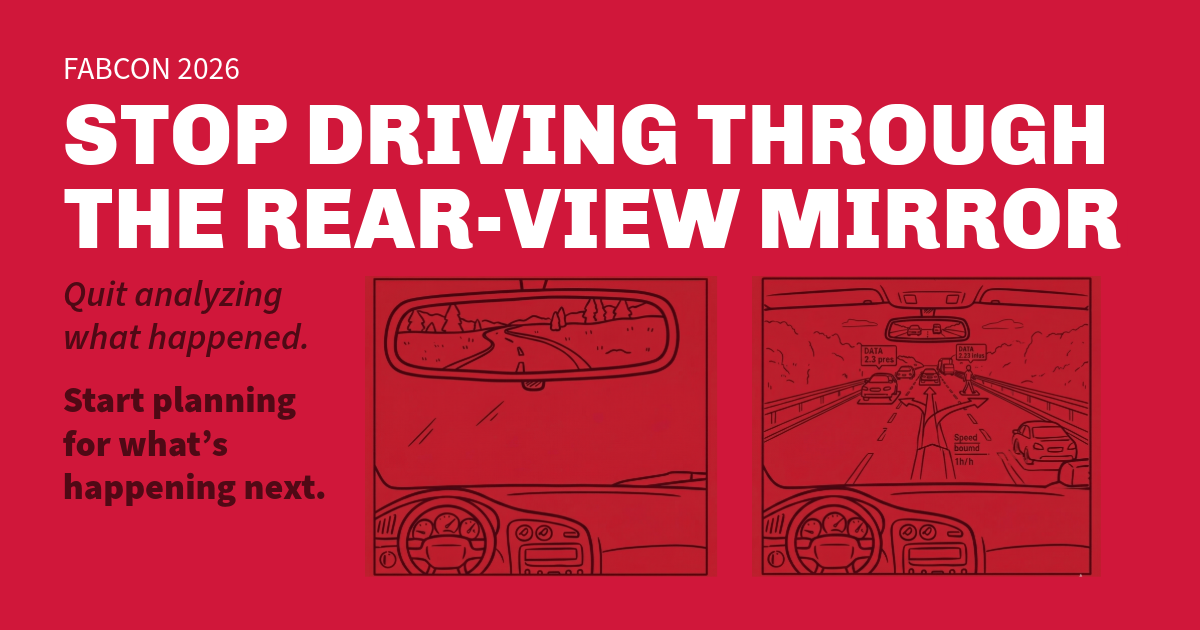
As of FabCon 2026, Microsoft Fabric is shifting from centralized storage toward distributed operational reasoning. With over 31,000 customers and 90% of the Fortune 500 now on the platform, the momentum is undeniable. Yet for many enterprise leaders, a high-consequence gap remains between AI aspiration and data reality.
The focus has shifted from merely moving data into the cloud to building a platform that understands how a business actually runs. It’s a pivot toward Proactive Operational Intelligence.
Key 2026 announcements have centered on Fabric IQ and Ontologies. This represents a move toward a shared intelligence layer designed to represent business entities – like planes, pilots, or maintenance actions for an airline – rather than just rows in a database. While Microsoft is signaling a shift away from technical table schemas as the primary interface, the reality for the enterprise remains: an ontology is only as reliable as the data it sits upon.
This matters because it highlights Microsoft’s intent to bridge the context gap. By defining data as business concepts rather than technical labels, the platform aims to move AI from searching for information to reasoning over operations. It’s the vision of a system that understands the relationship between a part, a pilot, and a safety regulation. However, in practice, this foundational logic requires a production-ready environment that most implementations haven't mastered yet. Without a clean source of truth, these new intelligence layers risk enabling confident hallucinations.
Alongside this, the new Database Hub aims to provide a single view across fragmented estates, allowing leaders to manage disparate data environments without massive, custom consolidation projects.
When the platform understands the underlying business logic, it enables what Microsoft calls Intent-Based Engineering. It’s a move from telling an AI what to do (writing precise SQL or Spark code) to telling it what you want to achieve (provisioning an entire domain environment using simple prompts). Microsoft is signaling a future where the right architectural choice becomes the easy choice by default.
Two distinct updates drive this "Intent-Based" philosophy:
These updates are designed to move AI beyond simple productivity tasks and into the core of business innovation. By grounding AI in Ontology, Microsoft is providing the framework for autonomous agents to reason and act with confidence.
In conversations away from the keynote floor, it became clear that while everyone is excited to define their business via Ontologies, the implementation hurdles remain foundational:
The reality is that an autonomous agent is only as capable as the logic it can reason over. Solving for these structural gaps – ingestion, schema, and modeling – is the prerequisite for moving from a series of disconnected pilots to a cohesive, AI-ready enterprise brain.
The era of operationalizing intelligence is upon us. But as the keynote lights fade, enterprise leaders are left with an important question: How do we build a future-ready estate without abandoning the governance that keeps us on track today?
At Trility, we believe the path forward is about using these tools to solve high-consequence problems with discipline. We anchor our Fabric engagements in strategic principles designed to turn "AI Intent" into "Operational Reality."
The shift toward proactive intelligence is often obscured by legacy technical debt and fragmented data silos. At Trility, we specialize in helping mid-market and enterprise organizations bridge this gap by grounding innovation in engineering rigor.
Stop guessing at your AI readiness. Whether you are consolidating fragmented silos or preparing for autonomous agents, we provide the technical authority to ensure your implementation is production-ready from day one.
Ready to move from AI aspiration to operational intelligence?
Trility is among the fewer than 1% of Microsoft partners nationwide with a specialization in data warehouse migration. We were pioneers in the Fabric ecosystem, executing some of the very first implementations. Our engineers bring an average of 17+ years of experience, ensuring your data works for you, so your business doesn't have to work for your data.


